
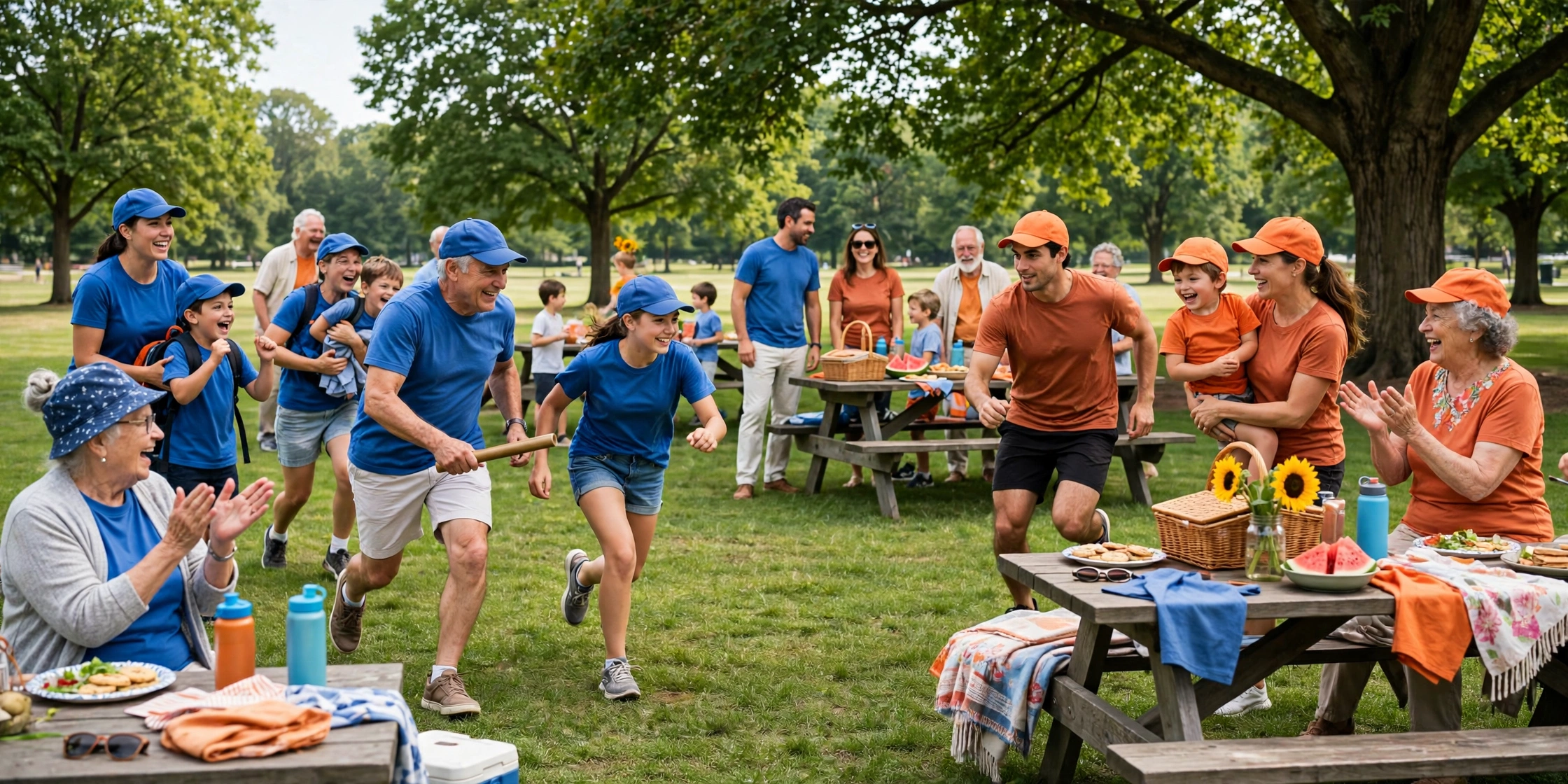
A family reunion tournament lives or dies on the teams. Put all the cousins on one side and the grandparents on the other and the games are over before they start; split the family well, give each side a name it is proud to shout, and suddenly three generations are arguing about tactics over the picnic table. This guide covers the whole job: how to split a family into fair mixed-age teams, how to pick names everyone from age six to eighty-six can get behind, and which games actually work when your players span sixty years.
Split the family into fair mixed-age teams
The golden rule is simple: every team should look like a miniature version of the whole family. Each side needs its share of teenagers (speed), parents (organization), younger kids (energy) and grandparents (strategy, and more competitiveness than anyone expects). If one team holds all the athletes and another holds all the toddlers, no game format will save the afternoon.
The reliable method is to sort everyone loosely into age bands, then deal them out one band at a time, first person to Team 1, next to Team 2, and so on, so each band is spread evenly. Keep couples and very young children with a parent on the same side, and quietly separate any two relatives whose rivalry is real rather than funny. Our free random team generator does exactly this split in seconds from a list of names, and because a tool made the teams, nobody can accuse the organizer of stacking a side.
Two to four teams is the sweet spot for most reunions. Two teams keeps every game simple and the rivalry loud; four teams lets you run a small knockout at the end of the day. Decide before you name anything, because the names often follow the number: two teams can be colors, four teams can be seasons, branches or grandparents’ names.
Pick a name theme the whole family can wear
A theme makes naming easy, because nobody has to invent anything from a blank page and every team name belongs to the same set. Three themes work at almost every reunion:
- Family branches: name each team after the sibling it descends from, a grandparent, or the town that branch comes from. It turns the scoreboard into a family tree and gives the older generation a side that is literally theirs.
- Colors: Red Rebels, Blue Brigade, Green Machine. Simple, visible across a field, and the easiest theme to match with shirts and wristbands.
- Family in-jokes: the famous burnt casserole, the legendary fishing trip, Dad’s first car. Names built on shared stories get the biggest laugh at the announcement and age well in photos.
Whatever theme you choose, run every name past two tests: a grandparent must be willing to say it in a toast, and a seven-year-old must be able to spell it on a banner. If you need a starting list, here are short examples in the classic reunion style:
- The Cousin Crew
- Grandma’s Favorites
- The In-Laws and Outlaws
- Second Helping Squad
- The Family Tree Climbers
- Reunion Royalty
- The Potluck Champions
- Kin and Tonic
Stuck between a few favorites, or want names in a funnier or prouder style? A good generator produces hundreds of options by style, and a shortlist the whole family can vote on settles the argument before you commit to shirts.
Games that work across the ages
The best reunion games share three traits: the rules fit in one sentence, a six-year-old and a grandparent can both genuinely contribute, and nobody is eliminated and left watching for an hour. Three formats pass every test:
Relay races with mixed roles
Build each leg for a different strength: a sprint for the teenagers, a balancing or carrying task for the kids, a puzzle or target throw for the grandparents, and a final leg anyone can do. Every leg counts the same, so the race turns on the whole team, not the fastest cousin.
A scavenger hunt across the venue
Hand each team the same list: something old, something borrowed from another team, a photo of the whole team mid-jump, the longest leaf, a relative who can name all the grandchildren. Hunts get people walking, talking and mixing across branches instead of sitting in their usual groups, and they scale to any number of players.
A family quiz
Mix general knowledge with family trivia: who won the egg-and-spoon race in 2019, what year did Grandma and Grandpa marry, which cousin lives furthest away. Alternate question styles so the kids’ rounds and the elders’ rounds balance out, and let teams confer, because the arguing is the entertainment.
For sit-down moments, rainy spells or the gap while food cooks, break into smaller activity groups rather than whole teams. Our random group generator splits any list into even small groups for board games, crafts or quiz sub-rounds, so nobody is left hovering at the edge of a table.
Finish with a mini knockout
End the day with one short knockout in whatever game drew the biggest crowd: quiz final, relay final or a tug of war. Keep it to semi-finals and a final so it lasts twenty minutes, announce the teams by their full names, and award something gloriously unofficial: a wooden spoon for the losers, a paper crown for the winners, and a photo of both teams together that goes on next year’s invitation. Points from the earlier games can seed the knockout, which gives the whole day a story: the morning builds the standings, the afternoon settles them.
Shirts and colors: the practical tips
- Order late, print big: finalize teams and names before ordering anything; a name in large letters reads in photos far better than a clever small one.
- One color per team, any shirt style: matching colors matter more than matching garments, and letting people wear their own comfortable shirt in the team color saves money and complaints.
- Cheap identification works: colored bandanas, wristbands or face paint identify teams just as well as printed shirts for a single day.
- Bring spares: a handful of blank shirts or bands in each color covers late arrivals and the relative who forgot.
- Photograph the scoreboard: names, colors and the final result in one picture becomes next year’s invitation art and this year’s group chat legend.
Start where the fun starts: with the names. Open our free team name generator, pick a style the family agrees on, shortlist the favorites and let everyone vote. Once the teams have names worth shouting, the games, the shirts and the stories tend to take care of themselves.